


World Resources Institute data shows that Indonesia contributed 2,03% gas emissions that pollute the world's air (10 highest in the world). Throughout the world it is recognized that transportation has a significant contribution to greenhouse gas emissions. Even his contribution can reach 15 percent globally.
According to I Gusti Ayu Andani from the Regional and City Infrastructure Systems Expertise Group, Bandung Institute of Technology (ITB), It's not just about the contribution of Indonesia's gas emissions that is included in the ranking 10 world highest, But what we should be worried about is the average level of greenhouse gas emissions in Indonesia which continues to increase.
“The increase in emission levels in Indonesia every year is higher than the global rate. This means there is no significant decline,” said Ayu when giving a presentation at a webinar held by the Technology Journalists Forum (Forwat), Wednesday, 25 Mei 2022.
Fabby Tumiwa also explained the same thing, Executive Director Institute for Essential Services Reform. According to him, Emissions from the transportation sector contribute 27% of total emissions or approx 160 million tons in Indonesia in year 2020. Total emissions in year 2020 as big as 590 million tons and is expected to continue to rise if no intervention is carried out.
“The largest contributor to emissions in the year 2020 comes from the electricity sector amounting to 35% followed by the transportation sector, namely 27%. In order to achieve Net Zero Emissions (I) in year 2050 all over the world, decarbonization is needed in both sectors, specifically the transportation sector, one of which is the transition to electric vehicles,” said Fabby.
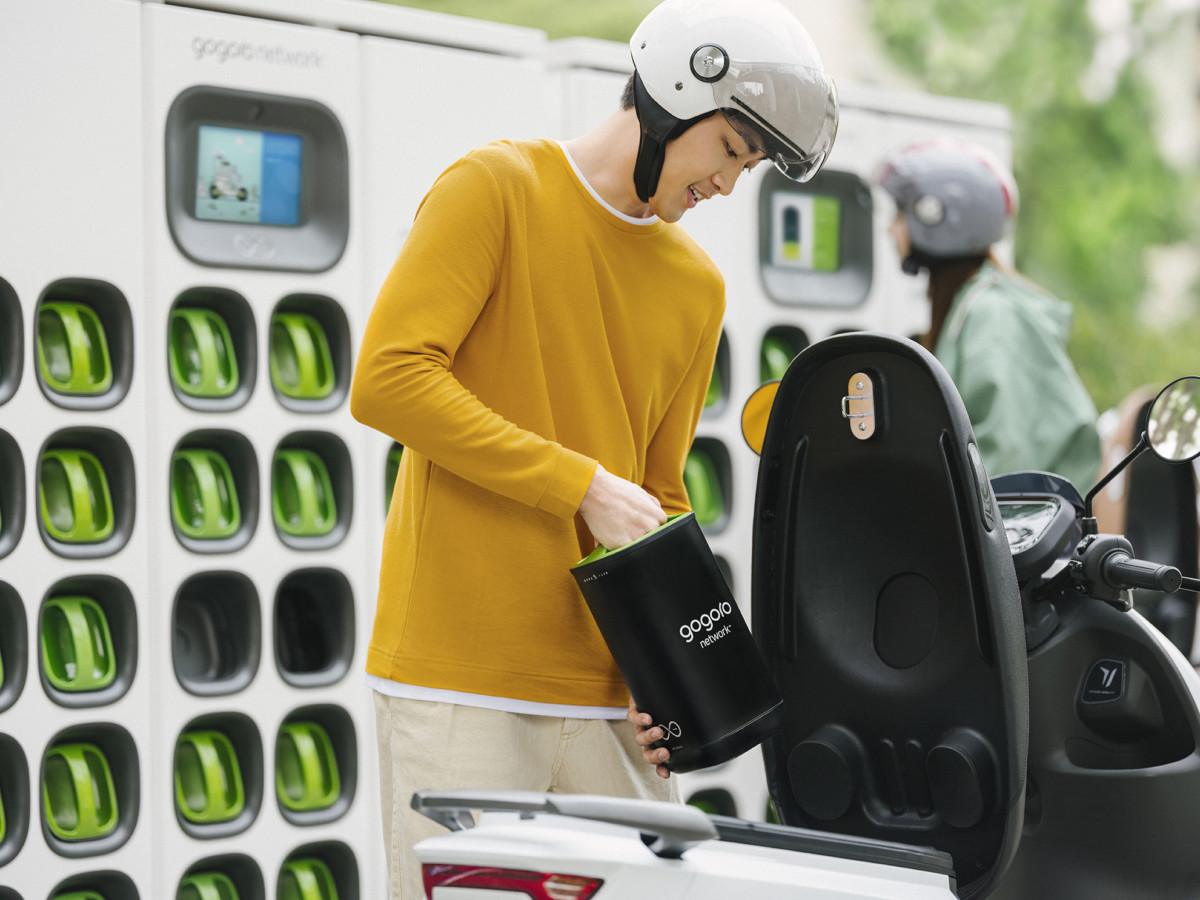
Fabby said, electric vehicles must rule 40% total vehicle sales in the year 2030 globally to achieve net zero emissions by year 2050. Switching from conventional vehicles to electric vehicles is not an easy matter. In Indonesia, for example, only 3.500 two-wheeled electric vehicle units and 1.800 units of four-wheeled electric vehicles sold in 2021. One of the biggest challenges is building a supporting ecosystem, especially battery recharging stations and also battery replacement (swap).
Ayu added, Sustainable efforts to achieve NZE from the transportation sector do not necessarily require using smart technology that is too complicated. Some characteristics of a smart transportation system that can be implemented are shared mobility, electric mobility and integrated mobility.
“Shared mobility is ride sharing as has been implemented by companies such as Gojek. Also integrated mobility where all transportation is connected and integrated with each other. Meanwhile, electric mobility means using vehicles that are more environmentally friendly, such as electric vehicles,” said Ayu.
However, according to Ayu, all environmentally friendly transportation infrastructure must be sustainable. Not only providing electric vehicles, but also other supporting infrastructure, such as recharging electricity. Ayu's statement was also reinforced by Fabby. he said, Electric vehicle charging infrastructure can increase public confidence in electric vehicles, although currently the realization of development is still far from the predetermined target.
Fabby explained, the realization of the SPKLU battery recharging station and battery replacement or SPBKLU has only reached, each 47% And 9%, compared to the road map made by the Ministry of Energy and Mineral Resources in 2021. Whereas, he was sure, Well-developed electric vehicle charging infrastructure can help reduce range anxiety and increase public confidence in electric vehicles.
Ayu herself appreciates what one of the applications has done in Indonesia, namely Gojek. According to him, even though the Transportation Law does not yet include applications such as Gojek as a mode of public transportation, However, this ride-sharing model can be relied on to reduce CO2 emissions in a sustainable manner. One of them is by supporting the use of electric vehicles and providing end to end integration. This will prove to have a more significant impact on the environment.
Respond to this, Vice President Corporate Affairs Gojek, Teuku Parvinanda revealed that since last year Gojek has had a commitment to realizing Zero Carbon Emissions (Zero Emissions) in the year of 2030 as part of our seriousness to achieve the Three Zero target (Three Zeroes) in the same year – i.e. Zero Carbon Emissions, Zero Waste (Zero Waste), and Zero Barriers (Zero Barries). Each covers pressing issues related to environmental performance, social, and governance so that it has become Gojek's focus and the driving factor for the company to give its best efforts in everything it does.
“Environmental friendliness is also a relevant issue and needs to be our common concern and priority. The intention to provide the best for the parties in our ecosystem has been there from the start, by addressing the real challenges that Indonesian citizens face every day, That's why we present various innovations starting from the presence of the GoGreener feature in our application, electric vehicle trials, to GoTransit,” said the man who is often called Andri.
Apart from that, Gojek is also accelerating the transition process towards electric vehicles (EV) in Indonesia by conducting trials 500 two-wheeled EV unit in South Jakarta. In order to answer the challenges of electric vehicle infrastructure, Gojek collaborates with Pertamina to provide battery exchange stations, at seven (7) Pertamina gas station in South Jakarta. Thus, Gojek driver partners can try electric motorbikes with operational benefits that are cheaper than conventional motorbikes.
“At the end of the year 2021, Gojek in collaboration with TBS Energi Utama has formed Electrum to develop the electric vehicle ecosystem in Indonesia. Then in February 2022, We are strengthening this commitment again together with several parties, namely Pertamina, Be agile, Gogoro also presents the electric GoRide service. So that, apart from providing environmentally friendly modes of transportation, We also ensure easy access for consumers and our partners,” explained Andri.
Another green program carried out by Gojek is the GoGreener feature which invites consumers to 'plant trees’ while traveling on GoRide and GoCar, as part of an individual's contribution to absorbing the carbon footprint. Since this feature was launched, Gojek and its consumers have succeeded in collecting, plant or adopt 5.000 more trees in 13 different locations through the GoGreener Absorb Carbon Footprint feature (GoGreener Carbon Offset).
In April 2022, Gojek officially launched the GoGreener Collective Tree feature which encourages consumers to plant trees while walking, just by adding a fee of IDR 1,000 – Rp2.000. As a first step in launching this feature, Gojek returns to planting 1.000 tree seedlings in Demak, Central Java, and every three (3) month, The trees collected by consumers will be planted at this location as well as other locations.
“In less than a month there have been more than 100.000 users who enable GoGreener's Collective Tree feature,” explained Andri.
It doesn't stop there, Gojek also presents the GoTransit feature which allows integration of Gojek transportation services with public transportation service providers. By reducing the use of private vehicles, Consumers can help reduce their carbon footprint while still carrying out their daily activities.
Fabby said, It is hoped that Gojek's efforts, especially in providing comprehensive and environmentally friendly electric vehicle infrastructure, can be followed by other transportation companies. Various initiatives such as those carried out by Gojek, In particular, the use of electric vehicles can reduce carbon emissions by 28% on wheeled vehicles 4 And 55% on two-wheeled vehicles. Especially, Total Cost of Ownership of an electric vehicle over the life of the battery, 20% cheaper than conventional vehicles.
Read too : Gojek and Gogoro will bring two-wheeled electric vehicles to Indonesia
