





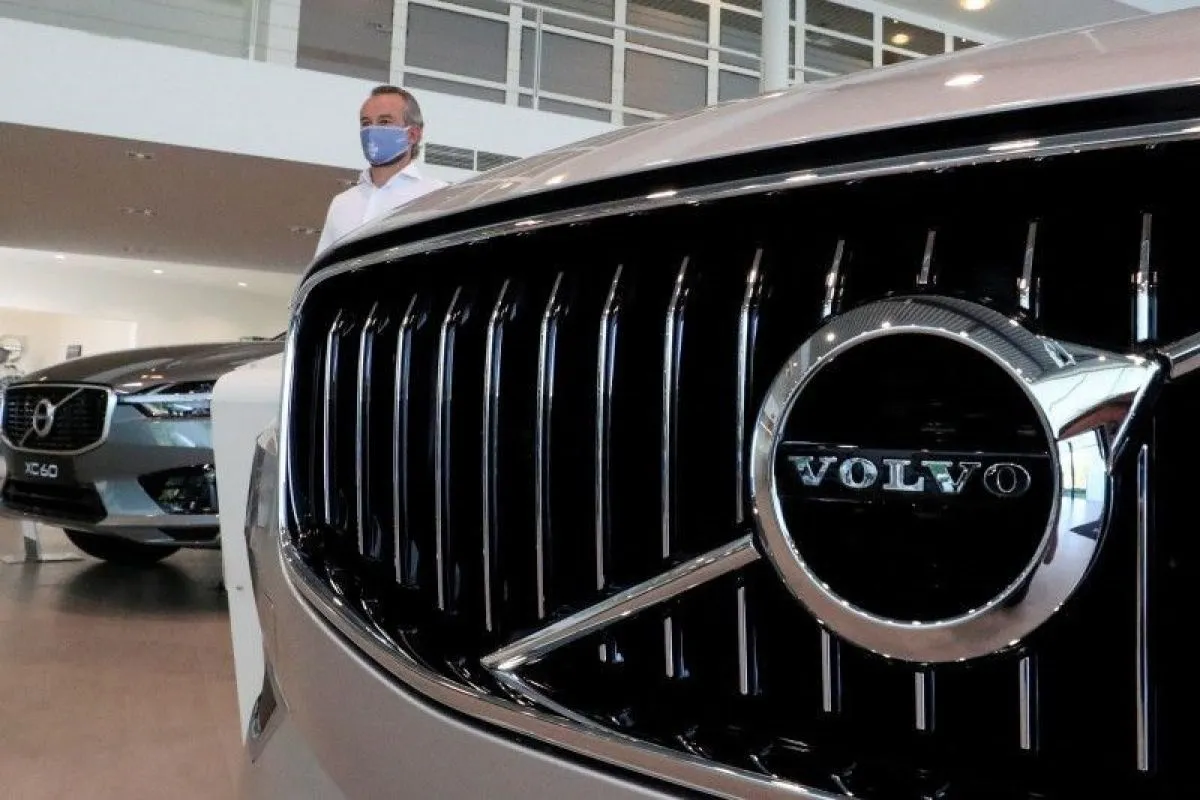
Otodiva – Volvo Cars, Swedish car manufacturer, is now revising its ambitious target to switch completely to electric vehicles by 2030. The company will continue to offer hybrid models alongside fully electric cars, a move that reflects a shift in strategy amid global challenges in electric vehicle adoption. This decision highlights the importance of a more pragmatic approach to electrification, especially in a market that is still in a transition stage.
Quoting reports from Reuters on Saturday, 7 September 2024, Volvo Cars revealed a decline in demand for electric vehicles, especially due to the lack of affordable models and the slow deployment of charging stations, is one of the main reasons for this change in strategy. Besides that, The increase in tariffs on imports of electric cars from China in Europe also influenced Volvo's decision.
In his statement, Volvo stated that the company is now targeting between 90% until 100% of cars sold in the year 2030 is a fully electric or plug-in hybrid vehicle. The rest, around 10%, will be a conventional hybrid model, where the internal combustion engine is still used as a companion to electric power.
Realistic Steps Toward Electrification
Volvo's change in targets shows that the transition to fully electric vehicles will not always be smooth. In many markets, customers are still hesitant to switch completely to electric vehicles due to limited supporting infrastructure, such as uneven charging stations. Therefore, Volvo decided to keep the hybrid model as part of their offering.
“Kami percaya bahwa masa depan kami adalah listrik,” ujar CEO Volvo Cars, Jim Rowan. “Namun, it is clear that the transition to electrification will not be linear, dan pelanggan serta pasar bergerak dengan kecepatan yang berbeda.” Rowan juga menekankan pentingnya dukungan kebijakan pemerintah yang lebih kuat dan stabil untuk mendorong percepatan elektrifikasi kendaraan.
Meanwhile, plug-in hybrids are projected to play an important role in Volvo's future profit growth. In a separate statement, Volvo revealed that the XC90 hybrid car will undergo a major overhaul to meet growing market demand. This strong demand for hybrid cars has prompted Volvo to adjust their long-term strategy.
Some of Volvo's flagship models in the fully electric vehicle segment are the EX90 and EX30, both are SUVs designed with advanced technology and environmentally friendly features. This vehicle is positioned as a flagship product that will help Volvo remain relevant in the global electric vehicle market. However, Growing demand for hybrid cars has driven a shift across the automotive industry, where other car manufacturers also adjusted their targets, initially focusing entirely on electric vehicles.
The Role of Hybrids in Future Growth
For many customers, especially in emerging markets, Hybrid vehicles are a more practical solution than fully electric vehicles. This is especially true in areas that still have limited electric charging infrastructure. Therefore, Volvo sees hybrids as an important transition step towards full electrification in the future.
“Kami yakin bahwa perjalanan menuju elektrifikasi penuh akan dilakukan secara bertahap, especially in markets that aren't quite ready for full electric vehicles,” ujar Erik Severinsson, Chief Strategy Officer and Chief Product Officer of Volvo Cars. According to him, This pragmatic approach will help Volvo customers switch slowly but surely to electric vehicles.
Volvo Cars predicts that in 2025, electric and hybrid cars will reach 50% until 60% of their total sales. Previously, Volvo targets at least 50% of total sales are full electric cars on 2025, while the rest are hybrid models. These adjustments show that Volvo is adapting expectations to dynamic market realities.
Policy and Regulatory Challenges
On the other hand, Volvo's switch to hybrid also comes amid efforts by several countries to encourage carmakers to stop using internal combustion engines that produce carbon dioxide emissions (CO2). Nevertheless, The challenges of implementing strict regulations and uneven supporting infrastructure mean manufacturers like Volvo have to take a more flexible approach.
Volvo Cars has consistently positioned itself as a pioneer in electric vehicles, but remains realistic in facing challenges in the global market. In Volvo's view, Government support is essential to accelerate this transition. The company is actively asking politicians to develop policies that support the development of electric vehicles and related infrastructure.
Furthermore, Volvo Cars remains steadfast in its commitment to achieve full electrification by 2030, but with a more flexible approach. Meanwhile several competitors are starting to reduce their ambitions in the electric vehicle segment, Volvo continues to innovate by offering a mix of fully electric and hybrid vehicles. It reflects a long-term strategy that is not only realistic but also adaptive to changing market needs.
With this adjustment, Volvo hopes to maintain its position as a leader in vehicle electrification, while still meeting the diverse needs of customers around the world.


